
Most vendor reviews stall on one question: what does this vendor's SOC 2 report actually say? soc2audit.ai answers it for you and turns the result into documented evidence.
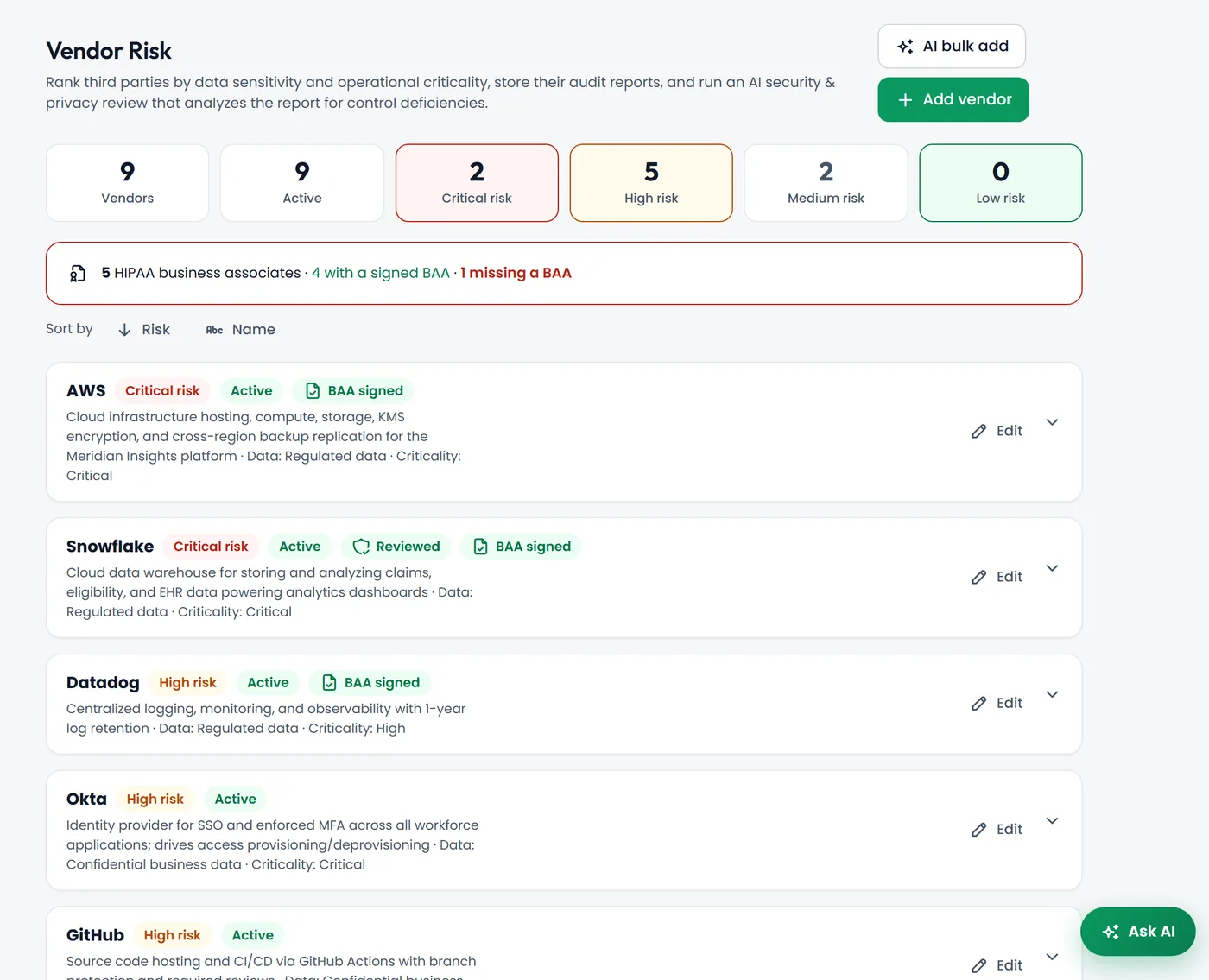
What you get
Two-dimension risk ranking
Rate each vendor on data sensitivity and operational criticality. The inherent risk tier is calculated for you, and regulated data never ranks below High.
AI security and privacy review
The AI drafts a narrative review grounded in the vendor details and its risk ranking, for you to edit and save.
Vendor SOC 2 report analysis
Upload a vendor's audit report and the AI checks the opinion type, control exceptions and deficiencies, scope and period, and complementary user entity controls (CUECs).
Residual risk
Findings from the report feed a residual risk tier, and deficiencies are flagged.
BAA tracking
For healthcare data, mark business associates and track signed, pending or missing BAAs.
Evidence on save
Each saved review records who reviewed it and when, and counts as evidence for vendor risk management.
Why it matters for SOC 2
The Trust Services Criteria include assessing and managing risks associated with vendors and business partners (CC9.2). Auditors look for a vendor inventory, a risk-based review process and evidence that reviews happened. soc2audit.ai keeps all three in one place.
Frequently asked questions
What should I look for in a vendor SOC 2 report?
The opinion (unqualified or qualified), any exceptions or deficiencies in testing, whether the scope and period cover the services you use, and the complementary user entity controls you are expected to operate. soc2audit.ai highlights each of these.
Which vendors need a review?
Focus first on vendors that handle sensitive data or that your service depends on. The risk tier tells you where to start.
Does this replace vendor questionnaires?
It reduces the need for them. Reading a current SOC 2 report is often faster and more reliable than a questionnaire, and the platform documents the result for your auditor.